

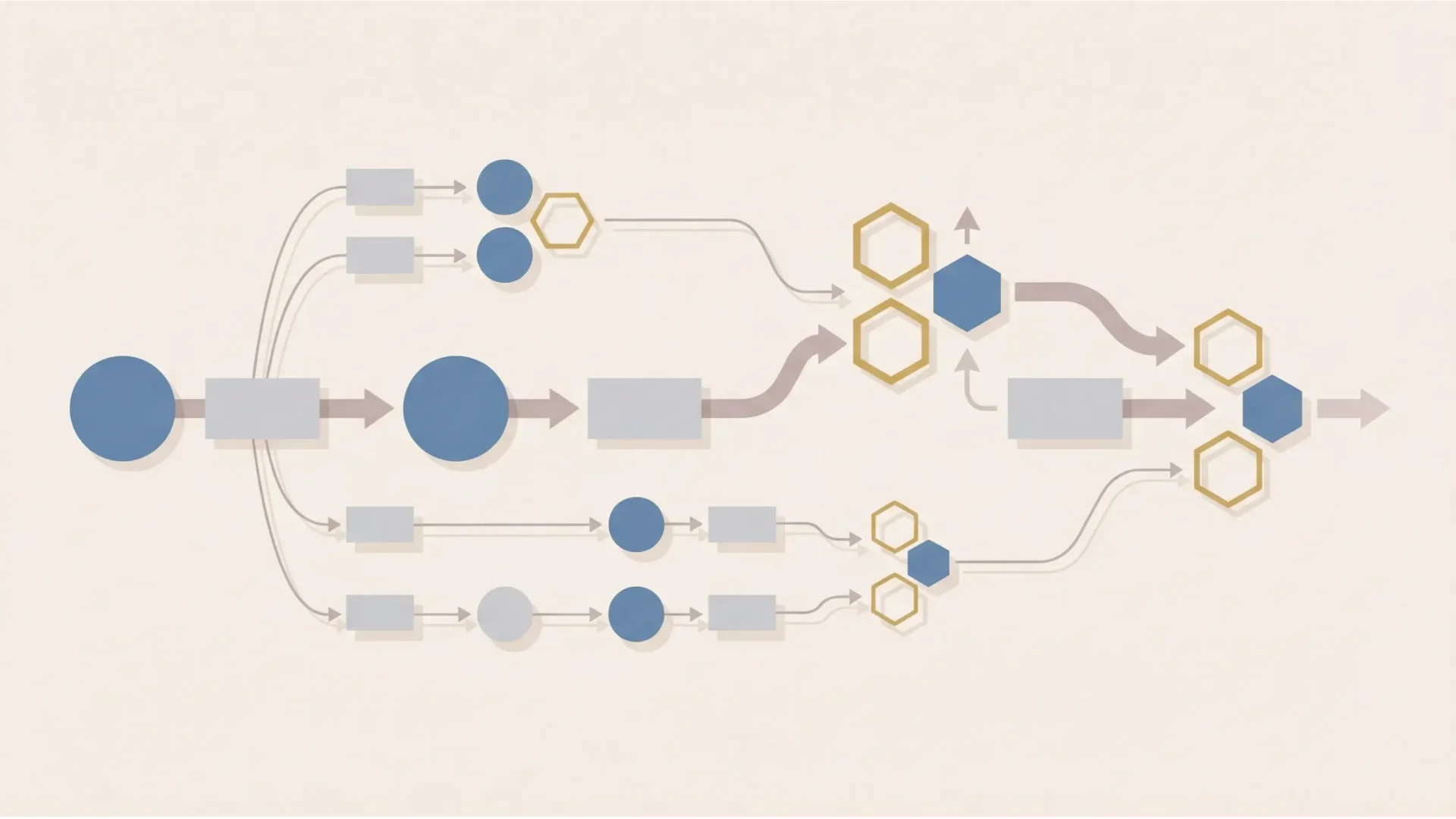
How Internal Approval Processes Shape Domain Purchase Decisions
Most domain sales don’t fail because of price. They fail because of internal approval bottlenecks.
Internal approval domain purchase processes are often invisible to sellers, yet they determine timing, budget, and the final decision more than any market factor.
Understanding how approval chains work inside companies helps explain why buyers hesitate, delay, disappear, or suddenly reappear with a new budget.
This guide clarifies the hidden mechanics behind internal decision-making, showing why even motivated buyers often need more time than expected.
Why Internal Approval Domain Purchase Chains Matter More Than Price
Sellers focus on negotiation logic.
Buyers operate inside constraints, policies, and organizational structures.
Before a buyer can confirm a domain purchase, they often need:
marketing sign-off
product or leadership alignment
compliance review
financial approval
brand consistency validation
This means the buyer’s “yes” is rarely a single decision — it’s a sequence.
The domain may be perfect.
The timing may be right.
But without internal alignment, nothing moves.
Les 3 niveaux de prise de décision interne
Niveau 1 : Approbation opérationnelle
Il s’agit de l’acheteur lui-même ou de l’équipe qui effectue la demande.
Ils valident :
pertinence
adéquation stratégique
urgence
alternatives
À ce stade, l’enthousiasme est généralement élevé, mais l’autorité est faible.
Niveau 2 : Examen par la direction ou le département
Ici, le domaine doit se justifier par :
alignement marketing
feuille de route du produit
stratégie concurrentielle
contraintes de temps
Cette couche introduit des frictions, des débats et des priorités concurrentes.
Niveau 3 : Approbation financière ou exécutive
C’est à ce stade que les transactions s’accélèrent ou se bloquent.
Les dirigeants examinent :
impact total sur le budget
timing vs retour sur investissement
si le domaine accélère les objectifs commerciaux
si des alternatives moins chères semblent « suffisamment bonnes »
Un acheteur motivé ne peut pas passer outre cette étape.
Why Approval Chains Slow Down Domain Purchases
Approval processes introduce:
delays
extra questions
risk perception
shifting priorities
internal debates
These factors create pauses that sellers misinterpret as “lost interest.”
In reality, the buyer is often waiting on someone else — not changing their mind.
How Internal Policies Affect Budget Flexibility
A buyer might personally approve a domain at $5,000.
Their internal policy might cap domain purchases at $2,500 without higher approval.
This creates scenarios like:
buyer wants the domain
buyer cannot justify the higher tier
buyer has to escalate and wait
the deal pauses
momentum drops
Budget limitations are rarely emotional — they are structural.
Internal Approval Explains Sudden Buyer Disappearances
This is where Guide #13 connects naturally (add internal link) :
Many “buyer disappear domain negotiation” moments occur because internal approval temporarily halts the process.
Disappearance is usually a symptom of internal dependency, not rejection.
Silence reflects waiting, not refusal.
Why Different Teams See the Same Domain Differently
Brand team → sees identity and credibility
Product team → sees functional need
Marketing → sees campaigns and visibility
Finance → sees cost and risk
Executives → see long-term positioning
A domain that feels essential to one team may appear optional to another.
This difference explains budget friction and slow approvals.
How Internal Constraints Shape Final Offers
A buyer might initially aim at $8,000.
After finance review, the approved maximum might be $5,000.
This isn’t the buyer “lowballing.”
It’s the buyer adapting to the organization’s rules.
The offer reflects internal structure, not lack of interest.
Practical Buyer Takeaways
Internal approval delays are normal, not rejection
The buyer rarely controls the timeline
Budget limits come from policy, not desire
Silence often means internal review
The domain’s value must survive multiple viewpoints
Patience often beats pressure